


Shear stress: Are you working with the wrong flow rate?
May 11th 2017
Introduction
Knowing the real flow rate is an important matter in microfluidic research to avoid experimental errors and get the most accurate results. During an experiment, an error on the actual flow rate in the channels can have an impact on different levels, including on shear stress. Shear stress is given by the following Newton's law : 
where  is the velocity gradient (s-1) and
 is the viscosity (g/cm-s = Poise) and shear stress unit is Pascal (PA) in the SI system.
The velocity profile v(z) can be written as a function of the geometry and the flow rate, with a flow rate dependence that's usually directly proportional. Therefore, shear stress and flow rate are related and having experimental errors on flow rate measurements can lead to some mistakes in shear stress experiments. If the estimation of shear stress is wrong then the effects on cells can't be predicted and interpreted correctly.
For these previous reasons, having an accurate knowledge of the flow rate is beneficial for the success of a microfluidic experiment and in order to show the potential difference between the setting flow rate and the real one we did a simple set up with two different flow control instruments: a syringe pump and a pressure control system.
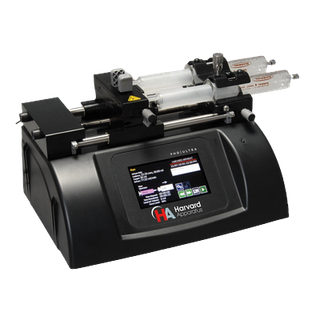
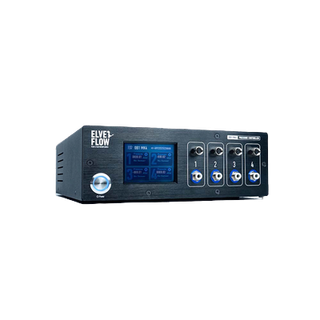
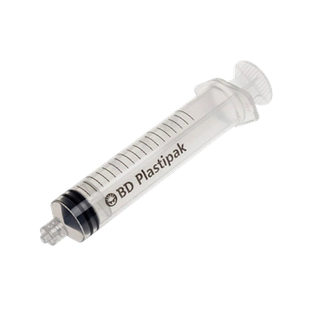
Syringe pumps are one of the most widely used instrument. They are easy to use but they have two major drawbacks. First they have a long flow responsive time and second it can lead to flow oscillations due to motor steps. On the contrary, pressure controllers are more stable and responsive but the maximum pressure is 8 bars.
Setup
Materials:
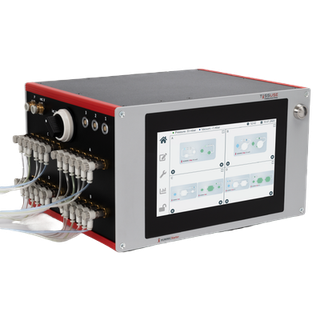
- A pressure flow control instrument (OB1) and a syringe pump
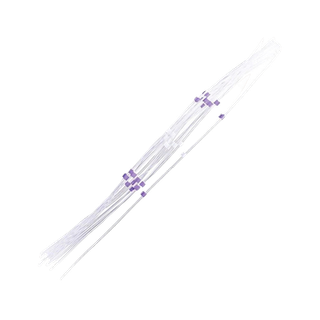
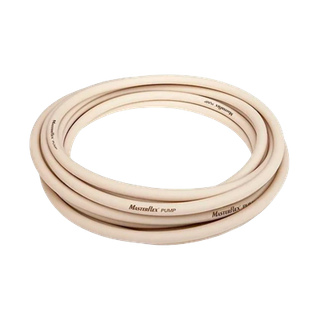
- Microfluidic Tubing for the fluidic connection of the setup elements
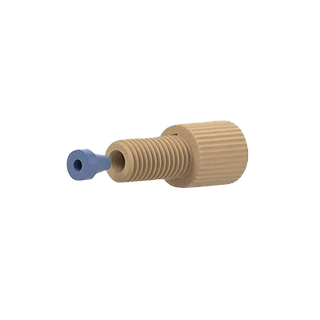
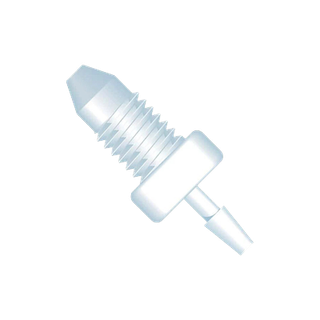
- Microfluidic Fittings and sample reservoir; Connectors
- Bronkhorst flow sensor
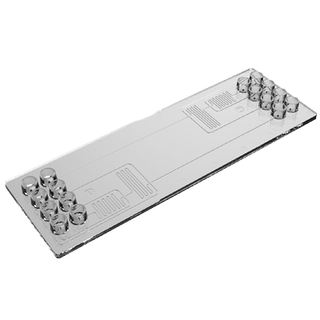
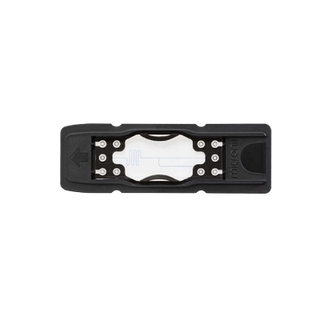
- A single channel chip
With a syringe pump:

With a pressure controller:

Results
Here are the graphics we obtained:


On the 3 different graphics we show the flow rate over time. The orange curve corresponds to the response of a syringe pump and the blue curve to the one of the pressure flow control instrument. We can observe that the response time is longer for the syringe pump than the pressure controller and the response is less stable over time for the syringe pump.
In an experiment where shear stress has to be contained or controlled, having a precise and accurate measure is crucial. The results of our experiment show that the syringe pump may not the best existing option when dealing with this type of experiments.
Conclusion
Knowing the real flow rate is possible
To control accurately the flow rate in your experimental set up, choosing the right instrument and using a flow sensor is a good option for high flow stability and responsiveness. The flow sensor will allow you to know the real flow rate delivered by your lab instrument in order to be able to adapt your experiment in real time and get the most precise results.
When working with shear stress, choosing the right flow controller can drastically alter the experiment result:
For historical reasons, syringe pumps have been more most used than other instruments or systems in microfluidic. However, there are existing solutions on the market with better technical features, leading to enhanced results when dealing with shear stress.
The two main characteristics, researchers need are responsiveness and stability. and the flow control system is one solution to get a precise flow rate and a fast response time.
We sell these different technologies. Feel free to ask us more details about it and we'll be happy to help you choose the one adapted to your needs and budget.
